Since the Taliban takeover of Kabul, Afghanistan, in mid-August, those of us on the other side of the world have had the same questions running through our minds on repeat.
“What does this mean for the people of Afghanistan? What does it mean for the most vulnerable—for women, for children, for those who have aided the United States over the last two decades?”
“What does this mean for the United States?”
“Could we have prevented this takeover? Was there a better way? Who’s to blame?”
Since the Taliban takeover of Kabul, Afghanistan, in mid-August, those of us on the other side of the world working in the sphere of refugee resettlement have heard one question above all of the rest.
“How can I help?”
Catholic Community Services of Utah is one of two refugee resettlement agencies in Salt Lake City—the other being the International Rescue Committee. Salt Lake City is also home to many other organizations, like Latter-day Saint Charities, that support refugees as they settle into life in the United States. Since the 1970s, CCS has been working to provide help and create hope for refugees forced to flee their homes as they resettle in Utah.
When a refugee client is resettled by CCS, our experienced staff offers clients a variety of services including case management, job placement, health services, interpretation, transportation, housing, food assistance, and more. Because of these services and resources, after six months, about 90% of our clients are working and can afford to cover their basic expenses.
Over the years, Catholic Community Services of Utah has resettled an average of 600 refugees a year, contributing greatly to Utah’s refugee population which now is approximately 60,000.
Our clients come from around the world—The Democratic Republic of Congo, Iraq, Afghanistan, Somalia, Myanmar, Venezuela, and more. Every one of our clients brings with them a slice of their culture, resilience, and strength beyond comparison, and a desire to rebuild a self-sufficient life here in the United States. Afghan refugees currently being evacuated from Afghanistan are no different. One thing has been clear: Our community members also stand ready to play their part in welcoming those forced to flee Afghanistan due to violence and persecution.
Those of us at Catholic Community Services of Utah are ready to play our part in providing help and creating hope for incoming Afghan refugee clients, just as we have for decades.
As CCS has prepared for this anticipated influx of clients over the past few weeks, one thing has been clear: Our community members also stand ready to play their part in welcoming those forced to flee Afghanistan due to violence and persecution. In recent weeks, our agency has received monetary donations, in-kind donations, and record-breaking volunteer inquiries. Community members have contacted CCS offering to house incoming refugee families, presenting employment opportunities, and aspiring to become refugee foster parents to unaccompanied refugee minors.
As our community continues to ask, “How can I help?” CCS will continue to answer, “In any way you can.” Whether you have time to spare, donations to contribute, or a heart for advocacy, there are plenty of ways to show your support for refugees from around the world who will soon make their homes in Utah.
The process of receiving refugee status can be lengthy, which means that Catholic Community Services of Utah will continue to need the support of community members in the months to come as refugee cases are assigned to our city.
Currently, monetary donations are a high priority for the agency.
Afghan evacuees are being flown into military bases across the country to undergo an extensive vetting process. Some will receive Special Immigrant Visas (SIV). These are given to those who have worked directly with the United States Armed Forces and other allied forces over the last two decades. Members of this group are assured resettlement in the U.S. and can go to their final resettlement locations and access full refugee benefits for two years. As our community continues to ask, “How can I help?” CCS will continue to answer, “In any way you can.”
Another group of Afghan evacuees has humanitarian parole status. These “parolees” likely meet the necessary qualifications for a Special Immigrant Visa. However, due to the circumstances in Afghanistan, the U.S. Embassy didn’t have adequate time to process their paperwork prior to evacuation. This group of people will be vetted in the same way as all refugees and will eventually be granted asylum. However, this group of people will receive federal benefits and support for an abbreviated 90-day period.
That being so, monetary donations are vital as CCS works to provide these individuals with the services and resources they need to rebuild their lives and achieve self-sufficiency.
Those wishing to make a monetary donation can do so here. Please include “Migration and Refugee Services” or “MRS” in the comment section.
Housing for incoming refugee clients in the greater Salt Lake City area is another current need of the agency. Whether you have a single bedroom or an entire apartment or house to donate or rent, Catholic Community Services of Utah would love to hear from you. If this is an area you would like to help in, please fill out this form on our website.
Along with housing comes basic household supplies like furniture, cleaning supplies, hygiene items, and more. In order to provide those items to clients, in-kind donations are also of great assistance.
One way to make an in-kind donation is through the agency’s Amazon Wishlist. There you’ll be able to view current donation needs and make a donation with just a few clicks. If you’d prefer to make an in-kind donation of household items or furniture outside of the Amazon Wishlist, please complete this survey.
Due to the generosity of our community, CCS’ storage facility is currently at maximum capacity. What a great problem to run into! Because of limited storage space, we are kindly asking those that would like to donate items, to store those goods until we are ready for them if possible.
As has been previously mentioned, the refugee resettlement process is just that—a process. Resettling refugee clients from Afghanistan and around the world can be a lengthy affair that resembles a marathon more than a sprint.
Catholic Community Services of Utah anticipates resettling refugee clients from Afghanistan over the course of the next year. Beyond that, CCS will continue to resettle refugees from around the world in Utah for many years to come, just as it has been doing for decades.
One of the most helpful ways to get involved in the global refugee crisis is to commit to staying involved in the global refugee crisis through continuous education and advocation. Commit to learning more about the global refugee crisis in an ongoing capacity.
Research the process of being granted refugee status, the history of refugee resettlement in the United States, or listen to the stories of refugees who have been resettled. Spend some time on the websites of organizations working to empower refugees like UNHCR and the United States Conference of Catholic Bishops.
Commit to sharing what you learn within your own sphere of influence—your friends, your family, your coworkers, your social media followers. Share with those nearest to you your heart for people around the world whose lives are ravaged by war, persecution, and violence.
Commit to being a person who offers compassion, who welcomes the vulnerable, and who believes that people matter most.
Commit to being a person who, day in and day out, looks at the global refugee crisis and continues to ask the question “How can I help?”
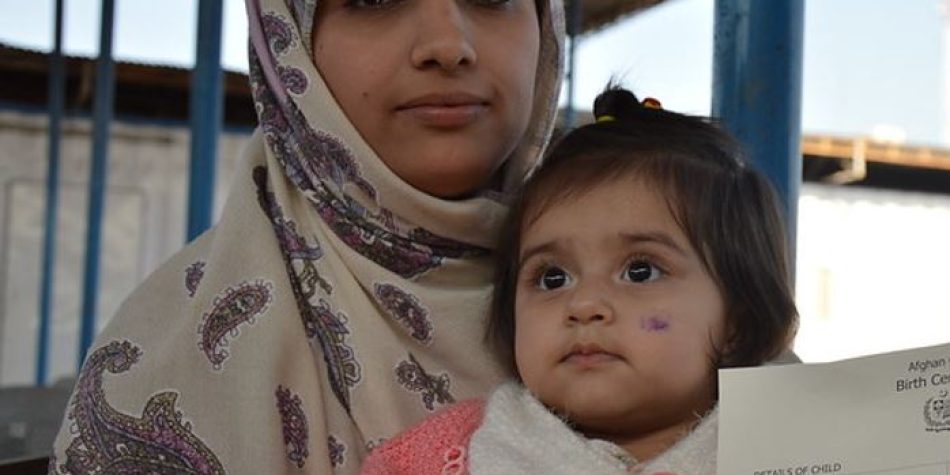
Photo from: European Union/ECHO/Pierre Prakash; available under a creative commons license.