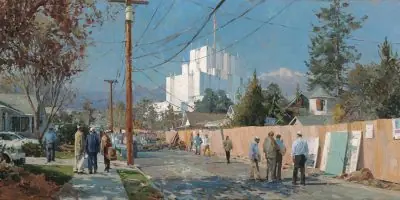

Fairview approved the temple, mediated the compromise, and should now honor the agreement already reached.

The Church Educational System is answering young adults’ loneliness with faith, mentors, and real belonging.

The Supreme Court did not broadly approve conversion therapy; it protected client self-determination in therapy.

Rather than defensively dismissing words as false, look seriously at the problems. How can we keep the marketplace of ideas open and functioning?

A contemporary set movie, “Valiant One” follows a US military unit in South Korea when they are blown off course and crash across the border in North Korea with a civilian tech specialist aboard. The film is putatively about the growth of Brock, who is thrust into commanding the unit after the crash. As the opening title cards tell us, “Heroes’ Aren’t Born. They Are Made.” And the We see him as he changes from struggling with his major decisions to beginning to make one. In one well-structured scene, the farmer catches them hiding in the barn. After a standoff, Brock approaches the farmer and de-escalates the situation. We see him and his soldiers as they recognize the humanity of their enemies, and make tough decisions. Ultimately, though, the areas he’s growing in don’t have a deep resonance because they aren’t Christ-like attributes. And the broader moral universe of the film is nihilist. It’s taut and well-structured and manages to tell a complete story in less than 80 minutes. It clearly is influenced by the years of experience director Steve Barnett has spent on the studio side of things. But it’s also clear that he lacks the artistic vision that elevates those essential storytelling blocks into an actual story. In some ways, the film reminds me of a paint-by-number before it’s been completed. Everything is in the right place, but it’s clearly not art or even particularly interesting to look at yet. The characters fall flat, particularly the two leads. Which keeps the story beats from ever coming together into a coherent whole. They have the kind of tragic backstories you’d expect, but they feel disconnected from the actions and motivations we actually see them enact. Eventually, even the plot feels like it’s doing circles, revisiting the same moral dilemmas and crises, without enough new character growth to warrant it. I can imagine there’s an audience for this movie. For those who love war movies, this one is clear and comprehensible. And if you are automatically invested in the uniforms, you have clear stakes that give the film energy and a through line that is enhanced by an aggressive hip-hop score. The film will probably most resonate with those with a similar backstory as Brock, who can see themselves as him. I imagine watching his growth would make this movie particularly meaningful to them. The film is R-rated. It is not particularly gory, but there is certainly war like violence, and we see many deaths, including executions. And the screenwriter went to lengths to capture the authentic pitter-patter of the way soldiers speak. But this means lots and lots of over-the-top pointless never-ending crassness and profanity. The larger moral of the film is pretty bland, and so by the end I felt degraded rather than lifted up. War movies can certainly uplift when they tell the right stories. This is not one of them. I wouldn’t watch it with my children, even when they were grown. If someone did, I would suggest asking them questions about the ethics of survival and the nature of leadership. One and a half out of five stars. Valiant One releases in the theaters January 31, 2025.
Much has been said about the Christian nationalism present in the hate crime mass shooting in Buffalo, including by us in the Public Square Bulletin. In fact a search for “Buffalo Shooting” and “Christianity” all center on the Christianity of the shooter, whether decrying the role religion played in leading to the shooting or taking efforts to separate religion from the actions of the shooter. But little has been said about the faith of the victims and community. This is a common thread in media reporting on tragedies, focusing on the way religion influenced perpetrators, but not how it helped heal victims. Religion News Services interviewed Rev. Denice Walden about the attack, and she was able to turn the focus to just those too-often underreported questions. Walden said, “We’ve also put out a call to clergy to just be a presence in this community. Just be a presence of peace, a presence of comfort, a presence of love in this community. Because at the end of the day, that’s what’s going to help us start to process. That’s what’s going to help us start to heal.” After the climax of a tragedy has passed, and the journalists move on, those remaining are often left with the long work of healing and community building, and it’s there where religion shines.